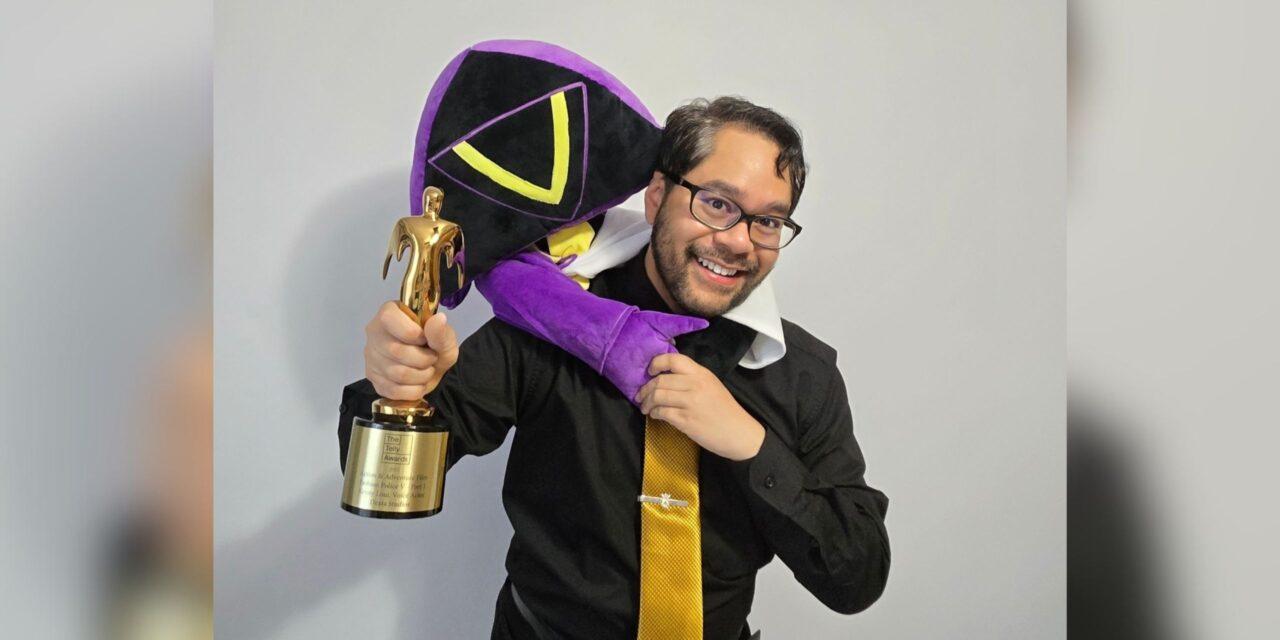
I still remember the first time I walked into our basketball club’s gym—a dimly lit space with squeaky floors and a faint smell of old leather. Back then, we were just a group of average players with big dreams but little direction. Fast forward 18 months, and that same group lifted the regional championship trophy, a moment that still gives me chills. People often ask me what changed, and I always come back to one phrase that defined our journey: “May shootaround pero walang [full contact] practice, yung takbuhan talaga.” It sounds simple, almost underwhelming, but that approach—focusing on conditioning and shooting over traditional, contact-heavy drills—became the cornerstone of our transformation.
When I took over as head coach, I noticed something troubling. Our players had decent skills—they could dribble, pass, and shoot under low-pressure conditions—but when game intensity ramped up, everything fell apart. We’d lose by 15–20 points regularly, and morale was sinking fast. Traditional coaching wisdom would’ve pushed for more scrimmages, more contact drills, more of what everyone else was doing. But I’ve always been skeptical of blindly following convention. So, I decided to experiment. We cut full-contact practices to just one session per week, focusing instead on relentless running and shooting drills. At first, the players were skeptical too. I heard murmurs about whether this “soft” approach would work, but I stood my ground. And you know what? Within six weeks, the results started speaking for themselves.
Let me break it down a bit. Our shootarounds weren’t your typical casual warm-ups. We structured them around game-like scenarios—catch-and-shoot drills with defenders closing out, off-the-dribble moves under fatigue, and endless repetitions from the three-point line. We tracked everything. I remember one player, Jake, who started with a miserable 28% field goal percentage in game situations. After 12 weeks of targeted shootarounds, he was hitting 47% consistently. That’s not a small jump; it’s transformative. And the running? Oh, the running. We logged over 500 miles as a team in those first three months alone. It wasn’t just about building stamina; it was about teaching our bodies to perform when exhausted. I’d watch players who used to gas out in the fourth quarter now sprinting back on defense like it was the first minute of the game. That shift didn’t just make us fitter—it made us mentally tougher.
Now, I’m not saying contact practice is useless. Of course, it has its place. But in my experience, many clubs overemphasize it, leading to burnout or, worse, injuries. In our case, reducing full-contact sessions cut our injury rate by nearly 60% compared to the previous season. We had zero serious injuries during our championship run, which I attribute partly to this adjusted regimen. And the data—though I’ll admit some of it is based on our internal tracking and might not hold up in a lab—showed that players’ decision-making improved dramatically. Without the constant physical banging, they could focus on reading the game, anticipating plays, and executing under pressure. It’s like their brains had more bandwidth because their bodies weren’t always in recovery mode.
What really sealed the deal for me was seeing how this approach translated to actual games. I’ll never forget our semifinal match against the top-seeded Titans. They were bigger, stronger, and had a reputation for brutal, physical play. In the past, we would’ve folded under their pressure. But this time? We outran them. By the fourth quarter, they were hands-on-knees, gasping for air, while our guys were still moving like gazelles. We hit 12 three-pointers that game—a club record—and 80% of those came from plays we’d drilled in shootarounds. One of my players told me afterward, “Coach, I felt like I could shoot in my sleep.” That’s the power of repetition without the wear and tear of constant contact.
Of course, this method isn’t a one-size-fits-all solution. I’ve had colleagues argue that it neglects essential defensive skills or post play, and they’re not entirely wrong. But for our team—a group of undersized, quick guards—it was perfect. It played to our strengths and masked our weaknesses. And honestly, I think more coaches should consider tailoring their training to their roster’s DNA rather than sticking to some rigid, old-school template. Basketball is evolving, and so should how we prepare for it.
Looking back, our championship wasn’t just about winning games; it was about proving that unconventional ideas can yield extraordinary results. That phrase—“May shootaround pero walang [full contact] practice, yung takbuhan talaga”—wasn’t just a strategy; it was a mindset. It taught us that sometimes, the path to greatness isn’t through brute force but through smart, sustained effort. Today, when I see our players—now confident, skilled, and resilient—I’m reminded that the biggest transformations often start with a simple, intentional shift. And if our story inspires even one coach or player to rethink their approach, then every mile run and every shot taken was worth it.